Land
Miami Homelands
Miami homelands hold deep spiritual and cultural significance for the Miami Nation of Indiana. According to our origin story, Miami ancestors emerged from the waters at a confluence along the St. Joseph River, grasping tree limbs to pull themselves from the river and into a new way of being. Through that sacred act, we became Myaamiaki . Though the exact place of our emergence is uncertain—perhaps where the St. Joseph meets the Elkhart River or flows into Lake Michigan—our people followed the river systems south, establishing communities along the Wabash River and its many confluences from Fort Wayne to Vincennes. These lands, which we call Myaamionki, the Place of the Miamis, have sustained us since time immemorial. Our continued presence in Indiana, despite generations of persistent marginalization, stands as a testament to our strength, resilience, and enduring connection to the land and waters that first gave us life. It remains our sacred duty to care for this land, just as it has always cared for us.
The rivers that flow through Myaamionki continue to hold great importance for our people, connecting us to the lands where our ancestors lived, traveled, and traded. Many of these waterways lie within or near our historic treaty lands in northern Indiana, where the Miami Nation of Indiana remains centered today. This region is rich with significant Miami sites, and nearly all of its rivers still carry Myaamia names—living reminders of our deep and enduring relationship with the land and waters that define our homeland.
For example, the Wabash River name comes from the Myaamia phrase waapaahsiki siipiiwi, meaning shiny or glittering river. The Mississinewa River comes from the Myaamia word nimacihsinwi, or “lies on a slope.” The Great Miami River is ahsenisiipiiwi in Myaamia, meaning “stone river.”
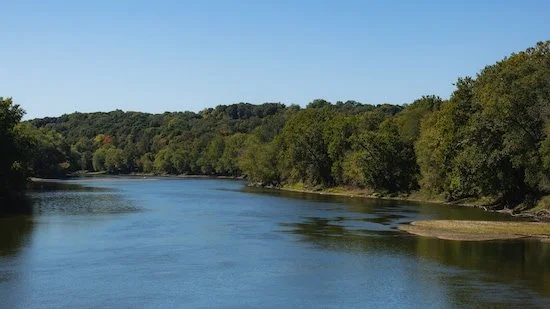
Wabash River
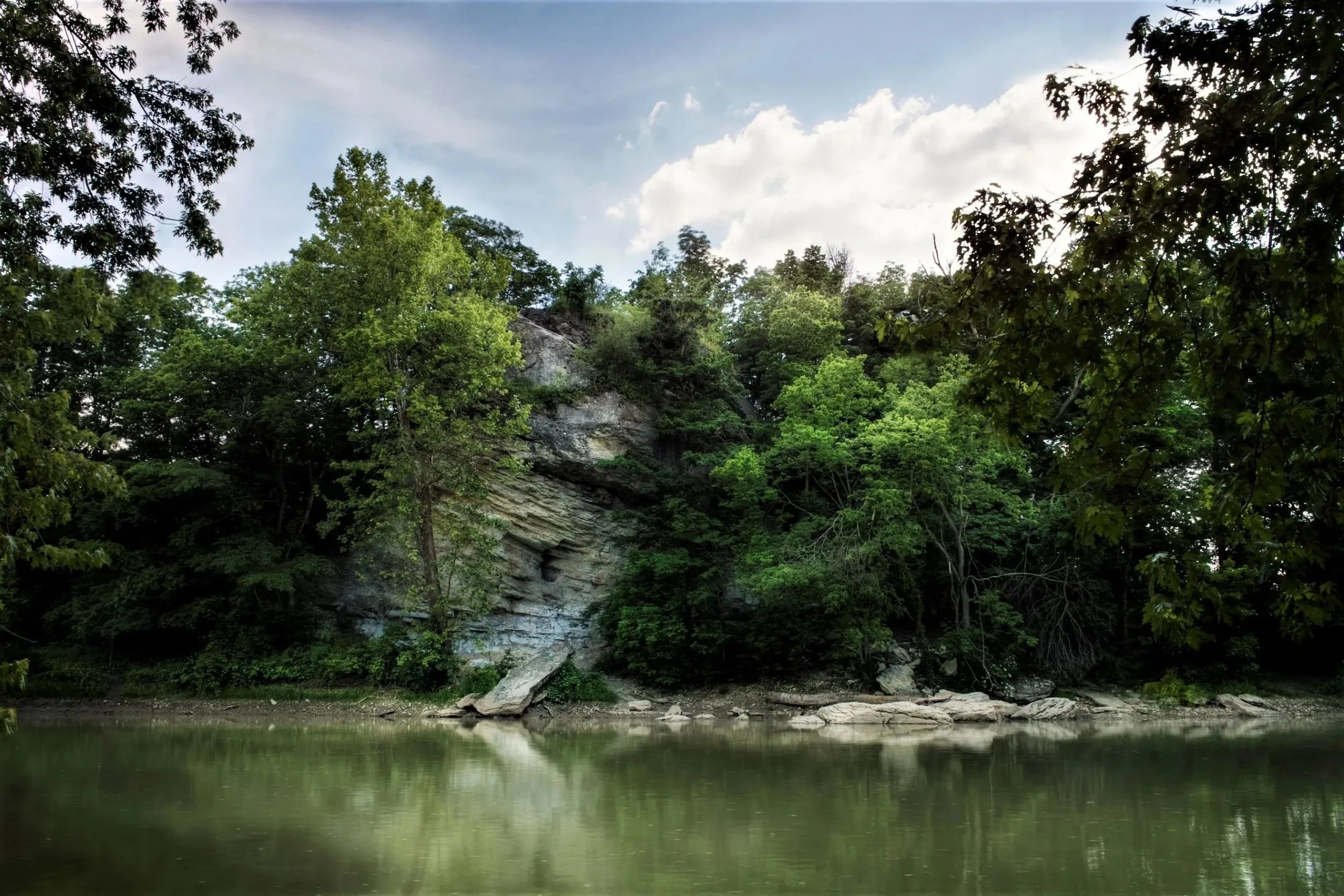
Hanging Rock on the Wabash River
If you are a current owner of Miami homelands and want to return land to the Miami Nation of Indiana, contact the tribal complex at miamiindians@sbcglobal.net.
Tribal Properties
Tribal Office
The Miami Nation of Indiana’s Tribal Headquarters, located in the historic former Peru High School in downtown Peru, serves as the heart of tribal operations and community life. Built in 1938 as a WPA project and now listed on the National Register of Historic Places, the complex houses tribal government offices, the Crane’s Nest, and a food pantry open to all Miami County residents. It also provides space for tribal gatherings, community events, and economic ventures such as bingo and entertainment activities that support the Nation’s self-sufficiency. The building’s vintage Indiana high school gym adds to its unique character, continuing to bring people together in the spirit of community and tradition.
Seven Pillars
Seven Pillars is a sacred and historically significant site for the Miami Nation of Indiana, located along the Mississinewa River northeast of Peru. The striking limestone formations served as a traditional gathering place for the Miami people and remain an important cultural and spiritual landmark. The property is privately owned by the Miami Nation of Indiana, and public access is not permitted in order to protect its sanctity and preserve its natural and cultural integrity.
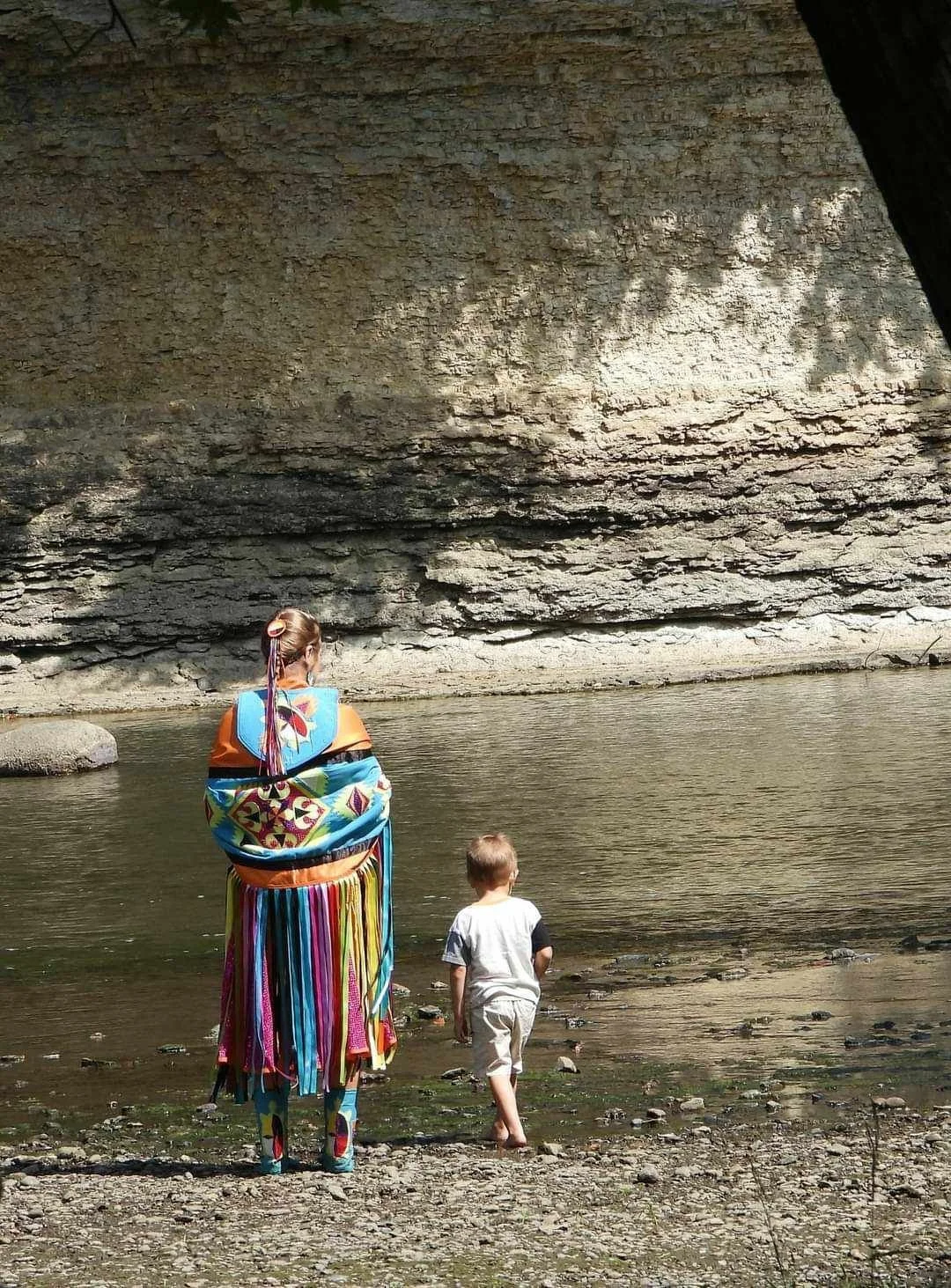
Kayla Rudd and child by the Mississinewa River
Parke County
The Miami Nation of Indiana’s Parke County property is a 150-acre woodland retreat located near Cecil M. Harden Lake (Raccoon Lake) in west-central Indiana, about one hour west of Indianapolis. This peaceful setting provides a space for tribal and community programming, including the annual All Nations Gathering—an event that celebrates Miami culture, unity, and shared connection to the land.
Schoolhouse
Along the north bank of the Mississinewa River near Marion, Indiana, Chief Meshingomesia of the Miami Nation once held an eight-and-a-half-mile reservation where the Miami Indian Village School was built in 1860. The school, originally intended to assimilate Miami children into American culture, was later rediscovered and returned to the Tribe after decades of being used as a corn crib. Carefully restored and reassembled, it now serves once again as a place of learning—this time to teach Miami language, culture, and traditions. The historic schoolhouse, now listed on the National Register of Historic Places, stands as a powerful symbol of the Tribe’s resilience and commitment to preserving its heritage.
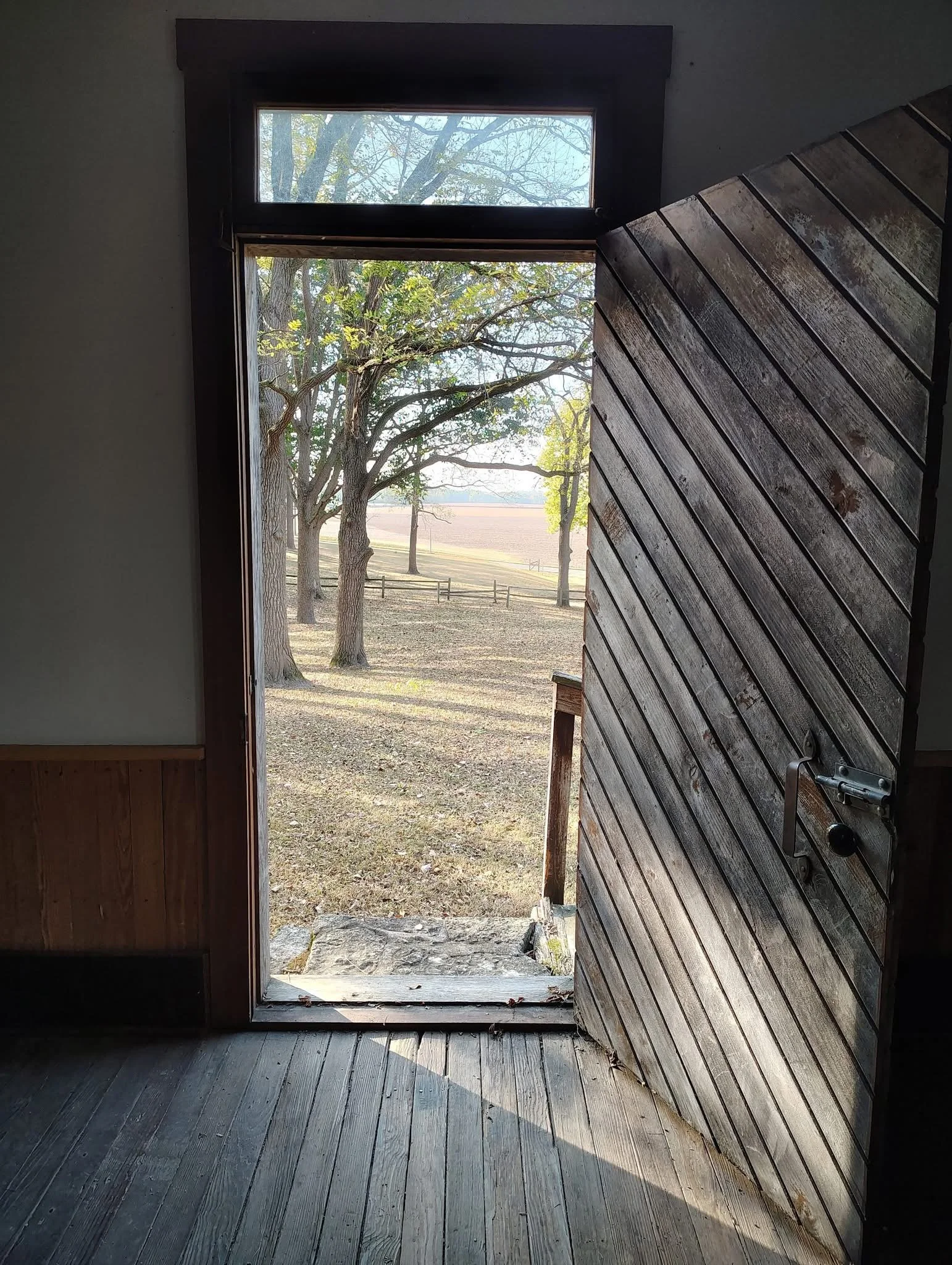
View from the front door of the Schoolhouse
These tribal properties are expensive to maintain. If you would like to partner with the Miami of Indiana to support the upkeep of these lands, please contribute to the Miami Nation Honor Fund.
Cemeteries
Throughout the 20th century, the Miami Nation of Indiana fought to protect the resting places of Miami ancestors, particularly when many of them were dug up and moved in order to flood the treaty lands and create the Mississinewa Dam and Reservoir. In the late 1980s, the Miami Nation of Indiana regained ownership over several of the most important Miami cemeteries. These cemeteries are organized by clan. Most of these cemeteries no longer have spaces for new burials, and those that do are running out of space quickly. Miami cemeteries hold great historical and genealogical value, and we are actively working to expand some of these cemeteries to keep our clans together.
If you are Miami and want to find your ancestors, look them up at www.findagrave.com